
Any Questions? Email Us
Talk to an Expert
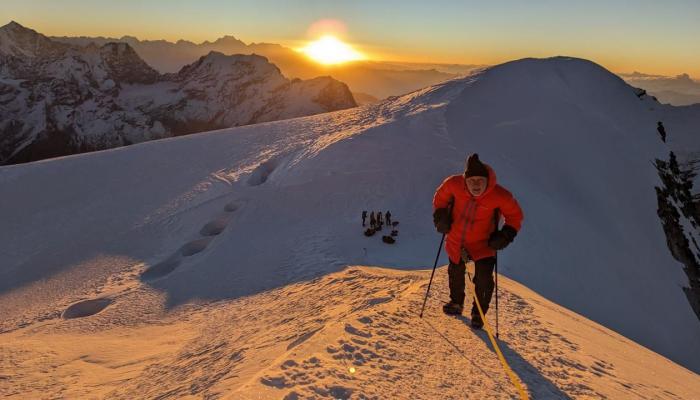
Mera Peak Climbing is one of Nepal’s most spectacular high-altitude mountaineering adventures, offering an extraordinary opportunity to experience the Himalayas beyond traditional trekking. Standing at 6,476 meters (21,247 feet) above sea level, Mera Peak is widely recognized as one of Nepal’s prominent trekking peaks and an exciting objective for adventurers seeking their first major Himalayan climbing experience. Located in the remote and magnificent Mahalangur Himalayan range of eastern Nepal, the peak provides an unforgettable combination of wilderness trekking, high-altitude adventure, mountain culture, and breathtaking Himalayan scenery.
The journey to Mera Peak is much more than a straightforward climb to a summit. It is a gradual transition from the lush lower Himalayan landscapes into an increasingly dramatic world of alpine valleys, rugged mountain passes, glaciers, snowfields, and towering Himalayan peaks. The approach route takes climbers through remote settlements, traditional mountain communities, dense rhododendron and pine forests, high-altitude valleys, and isolated landscapes where the natural beauty of Nepal remains remarkably untouched. Every stage of the journey contributes to the experience, making Mera Peak Climbing both a mountaineering adventure and an immersive Himalayan expedition.
Mera Peak has become particularly attractive to international climbers because it provides an opportunity to experience 6,000-meter Himalayan climbing without requiring the highly technical skills associated with some of Nepal’s more demanding expedition peaks. Nevertheless, the mountain should never be underestimated. Its considerable elevation means that altitude, cold temperatures, changing weather, snow conditions, physical exhaustion, and reduced oxygen can present serious challenges. A successful ascent therefore requires appropriate preparation, gradual acclimatization, strong physical fitness, mental determination, reliable equipment, and experienced mountain leadership.
The remote character of the Mera Peak region also gives the expedition a distinctive sense of adventure. Unlike heavily traveled trekking routes, parts of the Mera Peak approach pass through quieter Himalayan landscapes where trekkers can experience the natural environment at a slower and more authentic pace. The combination of remote trails, Buddhist-influenced mountain culture, traditional villages, suspension bridges, forests, high pastures, and spectacular mountain scenery creates a journey that remains memorable even beyond the summit itself.
For many adventure travelers, Mera Peak represents an important step toward Himalayan mountaineering. The expedition introduces climbers to the realities of high-altitude climbing, including early-morning summit schedules, glacier environments, crampon use, rope systems, ice-axe techniques, high-camp routines, and the discipline required for a successful summit attempt. This makes the mountain particularly appealing to trekkers who want to progress from conventional Himalayan trekking toward more serious climbing objectives.
The appeal of Mera Peak Climbing in Nepal also comes from the balance between adventure and accessibility. Climbers can experience the atmosphere of a genuine Himalayan expedition while traveling through one of the world's most famous mountain regions. The journey demands commitment, but it also provides an achievable and highly rewarding objective for properly prepared adventurers. Previous high-altitude trekking experience can be advantageous, while appropriate training and professional guidance can help first-time peak climbers understand and manage the demands of the expedition.
A carefully planned Mera Peak adventure places considerable importance on acclimatization. As the altitude increases, the body needs time to adjust to the decreasing availability of oxygen. A sensible itinerary therefore allows gradual elevation gain and sufficient opportunities for rest and adaptation. This aspect is fundamental to the overall experience because reaching the summit is not simply a matter of physical strength; it requires patience, preparation, decision-making, and respect for the mountain environment.
Mera Peak Climbing also showcases the remarkable geographical diversity of Nepal. The expedition begins in landscapes influenced by Himalayan forests and mountain agriculture before gradually entering the high-altitude environment of snow, rock, ice, and glaciers. This transformation makes the route visually fascinating and allows travelers to experience several distinct Himalayan ecosystems during one expedition.
With Outward Adventure Treks, Mera Peak Climbing can be approached as a professionally organized Himalayan adventure focused on careful planning, experienced mountain support, responsible travel, and a rewarding overall climbing experience. The mountain offers not merely a destination but a journey that challenges the body, strengthens determination, and creates lasting memories among the magnificent peaks of Nepal.
Mera Peak Climbing ultimately represents the spirit of Himalayan adventure: a demanding journey toward a remarkable summit, surrounded by extraordinary landscapes and the timeless grandeur of the Nepal Himalayas.
Climbing Mera Peak in autumn is one of the most popular choices for climbers seeking a high-altitude Himalayan adventure in Nepal. The autumn season, generally September through November, follows the monsoon and brings progressively clearer skies, improved trail conditions, and excellent visibility across the Himalayas. For Mera Peak, standing at 6,476 meters (21,247 feet), these conditions can make a major difference during both the approach trek and summit attempt.
Autumn is considered one of Nepal's prime mountaineering seasons because the summer monsoon has largely withdrawn from the Himalayan region. The atmosphere becomes clearer, precipitation generally decreases, and mountain views become more impressive.
For Mera Peak climbers, this means better opportunities to enjoy spectacular views of Mount Everest, Lhotse, Makalu, Baruntse, Chamlang, Nuptse, and other Himalayan peaks. The combination of stable weather and excellent visibility makes the autumn landscape particularly impressive.
Another advantage is the generally drier trekking environment. Lower sections of the route can still experience occasional rainfall in early September, but conditions normally improve as the season progresses.
September is the transition period between monsoon and autumn. Early September can still receive some rainfall, particularly at lower elevations, so climbers should be prepared for changing conditions.
As the month progresses, weather generally becomes more favorable. Trails begin drying, mountain visibility improves, and the landscape can appear exceptionally fresh after the monsoon.
September can therefore be a good option for climbers who want to avoid the busiest part of the autumn season, although flexibility is important because weather conditions can vary.
October is generally considered one of the best months for Mera Peak Climbing.
The weather is typically more stable, skies are often clear, and visibility across the Himalayan range can be outstanding. These conditions are especially valuable for the summit attempt, when climbers need favorable weather and good visibility to navigate high-altitude terrain.
October also offers a spectacular combination of crisp mountain air, blue skies, snow-covered peaks, and beautiful Himalayan landscapes. Because of these advantages, October is also a popular trekking and climbing month, meaning routes, teahouses, camps, and flights can be busier than during quieter periods.
November marks the end of the main autumn climbing season. The weather can remain exceptionally clear, particularly during the first half of the month, but temperatures begin dropping considerably at higher elevations.
For experienced and well-prepared climbers, November can provide excellent visibility and quieter trails compared with October. However, the increasing cold requires appropriate clothing, sleeping equipment, and preparation for freezing conditions.
As winter approaches, summit-day temperatures can become particularly harsh, especially before sunrise.
Weather is one of the most important factors when climbing Mera Peak. Even during the best season, Himalayan weather cannot be guaranteed.
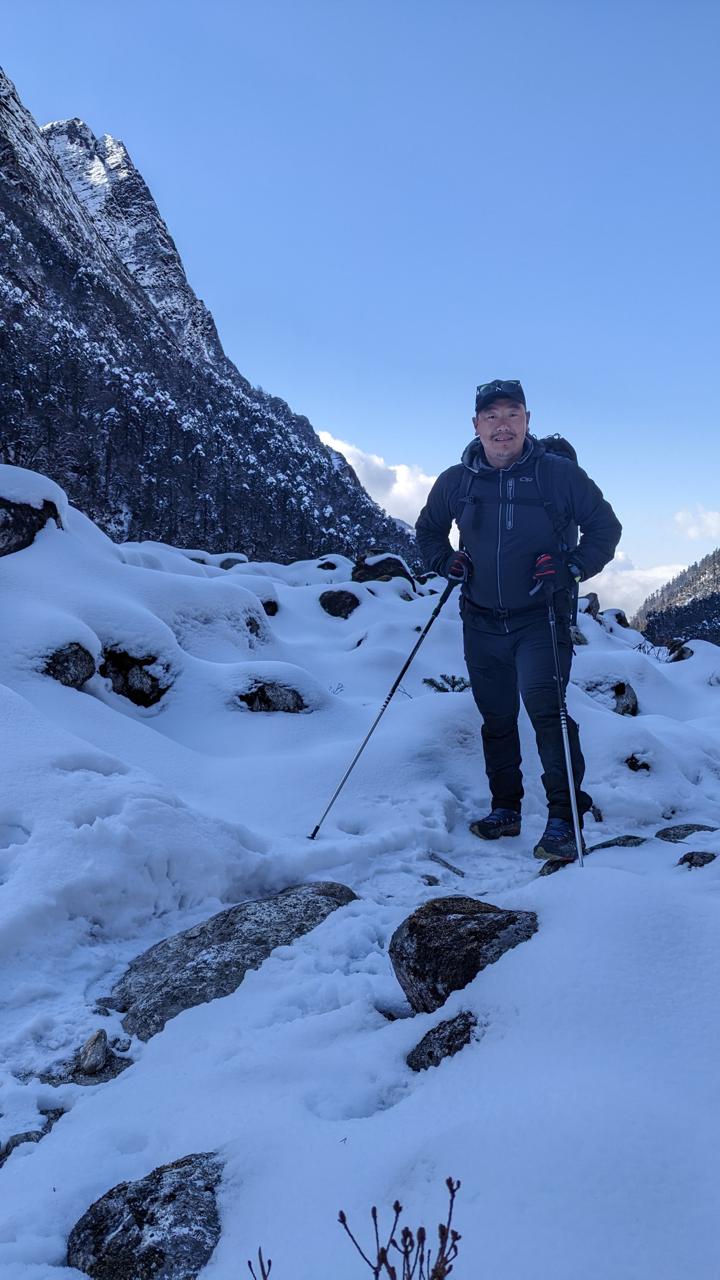
At lower elevations, daytime temperatures can be relatively comfortable, while temperatures around the base camp and high camp can be significantly colder. Near the summit, climbers may encounter freezing temperatures, strong winds, snow, and rapidly changing conditions.
A professional expedition team continuously monitors weather and route conditions before making decisions about the summit attempt.
Mera Peak Summit Day in Autumn
The summit attempt normally begins very early, often during the night or in the early morning. This schedule is designed to maximize the opportunity for reaching the summit during a suitable weather window and returning to lower elevations before conditions deteriorate.
An autumn summit day can provide breathtaking views as the first sunlight reaches the surrounding Himalayan peaks. However, the combination of darkness, extreme cold, altitude, and physical fatigue makes summit day demanding.
Climbers need to maintain a steady pace rather than attempting to move too quickly. Proper hydration, nutrition, clothing, and energy management are essential.
Acclimatization Is Essential
Good autumn weather does not eliminate the risks associated with altitude. At 6,476 meters, oxygen availability is significantly lower than at sea level.
A properly designed Mera Peak itinerary therefore includes acclimatization and gradual elevation gain. Climbers should pay attention to symptoms of altitude illness and communicate openly with their guides.
The objective is not simply to reach the summit quickly. Successful Mera Peak Climbing depends on allowing the body sufficient time to adapt to altitude.
The major advantages of Climbing Mera Peak in Autumn includes:
At high elevations, climbers must also be prepared for snow, ice, strong winds, freezing temperatures, altitude-related problems, and unexpected weather changes.
Therefore, autumn should be considered a favorable season—not a guaranteed-weather season.
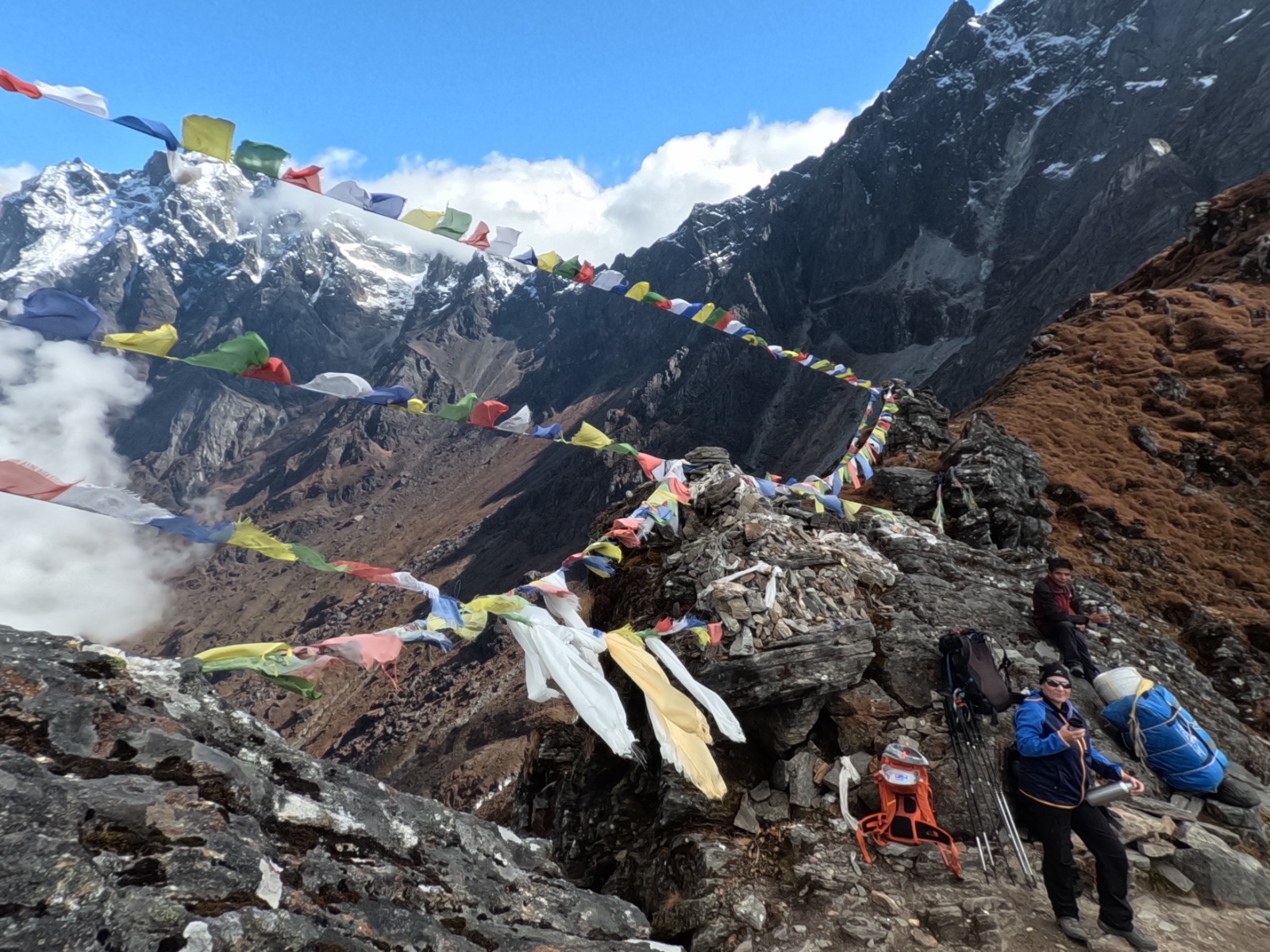
Outward Adventure Treks can offer the following planned fixed departure dates for Mera Peak Climbing (6,476m) in 2027 and 2028. The departure schedule is designed around Nepal's two principal Himalayan climbing seasons: Spring (March–May) and Autumn (September–November). Final departure arrangements may be adjusted slightly depending on weather conditions, Lukla flight operations, climbing permits, route conditions, and expedition logistics.
6 March 2027 — Early Spring Departure
3 April 2027 — Prime Spring Departure
24 April 2027 — Best Spring Climbing Window
8 May 2027 — Late Spring Departure
25 September 2027 — Early Autumn Departure
9 October 2027 — Prime Autumn Departure
30 October 2027 — Best Autumn Climbing Window
13 November 2027 — Late Autumn Departure
11 March 2028 — Early Spring Departure
7 April 2028 — Prime Spring Departure
27 April 2028 — Best Spring Climbing Window
6 May 2028 — Late Spring Departure
23 September 2028 — Early Autumn Departure
7 October 2028 — Prime Autumn Departure
28 October 2028 — Best Autumn Climbing Window
11 November 2028 — Late Autumn Departure
For climbers looking for the strongest combination of weather, visibility, acclimatization, route conditions, and summit opportunities, Outward Adventure Treks can particularly highlight:
Mera Peak climbing is generally recommended during spring and autumn, while monsoon and winter conditions can make the expedition considerably more challenging. The published Outward Adventure Treks guide also identifies March–May and September–November as the principal favorable periods.
These dates should be presented as planned fixed departure dates, rather than guaranteed summit dates. Mera Peak is a high-altitude mountain at 6,476 meters (21,247 feet), and the actual summit attempt depends on weather, snow and glacier conditions, acclimatization, flight operations, and the professional climbing team's safety assessment.
With Outward Adventure Treks, climbers can join a scheduled group departure or discuss a private/customized departure according to their preferred travel dates, group size, experience, and itinerary requirements.
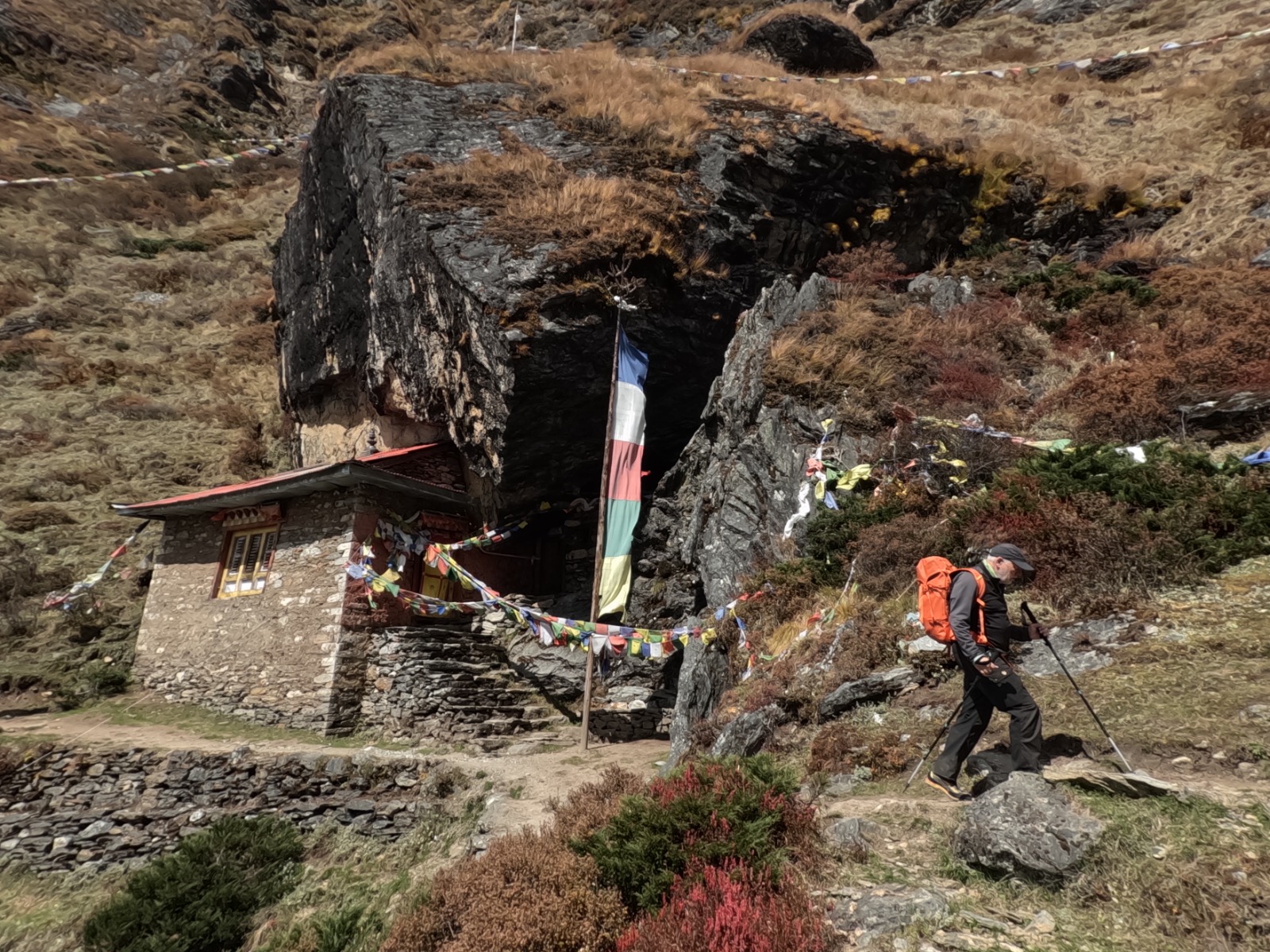
For climbers planning Mera Peak Climbing in autumn, professional organization can make the expedition considerably smoother. Outward Adventure Treks can arrange the essential components of a guided peak-climbing journey, including route planning, experienced mountain guides, acclimatization planning, logistics, accommodation, meals, climbing support, and expedition coordination.
A well-planned autumn itinerary should maintain flexibility because mountain conditions can change even during Nepal's most favorable climbing season. Autumn is an excellent season for climbing Mera Peak in Nepal, particularly from late September through October and into early November. Clearer skies, improved visibility, relatively stable weather, and magnificent Himalayan scenery create highly favorable conditions for the expedition.
However, Mera Peak remains a 6,476-meter Himalayan climb, and proper preparation should never be overlooked. Physical fitness, acclimatization, appropriate equipment, experienced guides, weather awareness, and responsible decision-making are essential.
For adventurers dreaming of standing above 6,000 meters with Everest, Lhotse, Makalu, and the greater Himalayan panorama surrounding them, an autumn Mera Peak expedition can be an extraordinary and unforgettable Himalayan experience.
The autumn season (September–November) is generally one of the best periods for a Mera Peak expedition because post-monsoon weather usually brings clearer skies and more stable climbing conditions. However, there is no single authoritative, publicly verified autumn-specific success rate for Mera Peak, and published figures vary substantially depending on how operators define “success” and which climbers are included.
For a properly acclimatized, physically prepared climber using an experienced guided team, some operators report substantially higher rates—around 85–90% or more—but these should be understood as operator/team-specific figures rather than an industry-wide statistic.
October typically offers the strongest combination of:
The biggest advantage is the greater likelihood of finding a suitable summit weather window. Nevertheless, Mera Peak reaches 6,476 m, so altitude remains a major challenge even when weather is excellent.
The most important point is that good autumn weather does not automatically guarantee a summit. Major factors include:
Historical Himalayan Database data across all Himalayan peaks also shows that autumn expeditions experience significant weather and snow-condition-related failures, demonstrating why seasonal averages should never be interpreted as a guarantee.
For Outward Adventure Treks, it would be better marketing—and more credible—to state “Mera Peak has a high summit success potential during the autumn season, particularly in October, when weather and visibility are generally favorable” rather than claiming a guaranteed percentage without documented company-specific records.
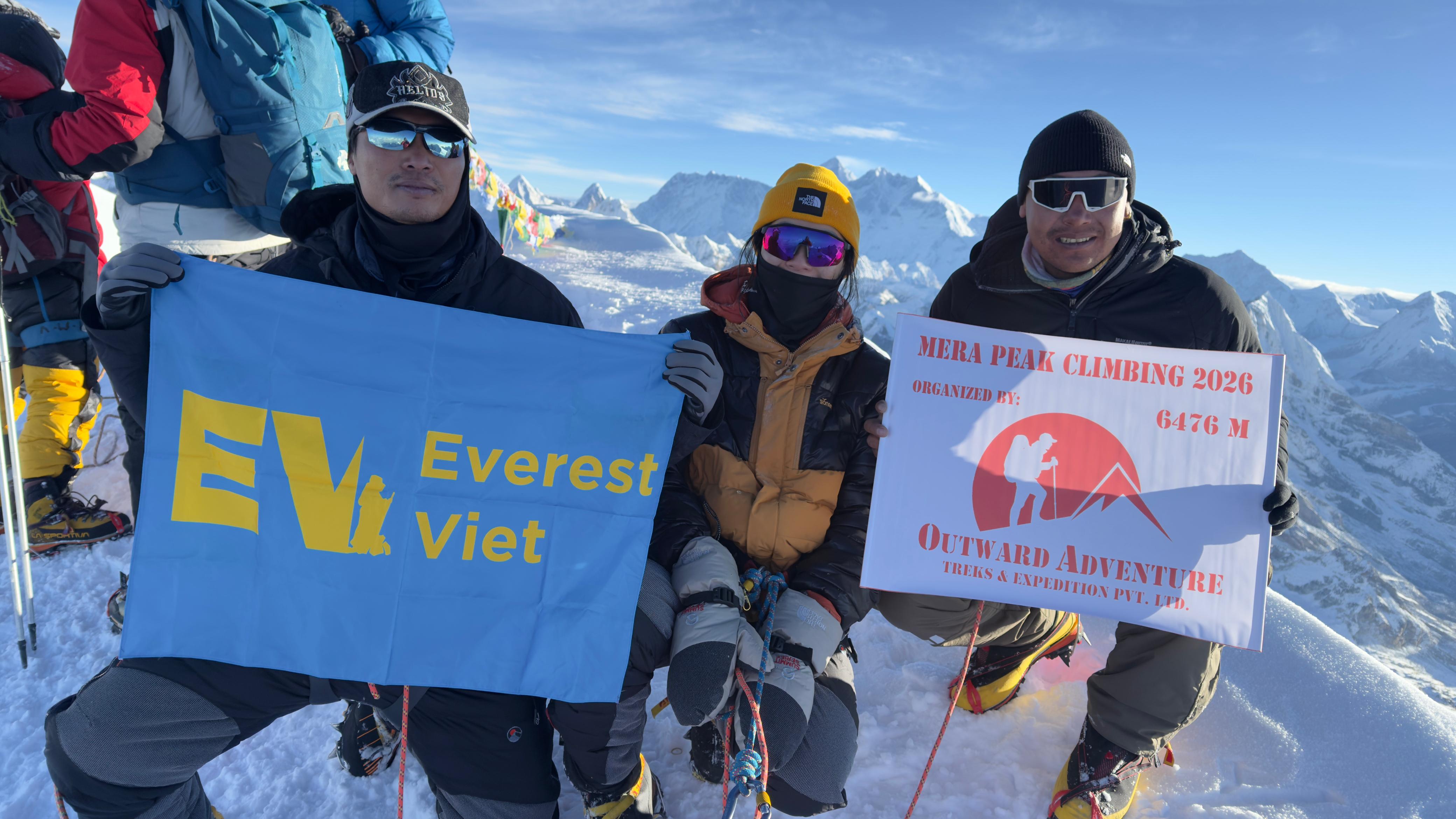
Autumn, particularly October and early November, is widely regarded as one of the most favorable periods for Mera Peak Climbing. The mountain rises to 6,476 meters (21,247 feet) in the Mahalangur Himalaya, and the autumn journey combines high-altitude climbing with spectacular Himalayan scenery, remote Hinku Valley landscapes, and Sherpa culture.
1. Clearer and More Favorable Autumn Weather
The biggest attraction of autumn Mera Peak Climbing is the generally stable post-monsoon weather. After the summer monsoon retreats, atmospheric moisture, dust, and haze usually decrease, creating much clearer conditions.
This is particularly important for a 6,476-meter climb because summit-day decisions depend heavily on weather and visibility. October is generally considered the strongest month within the autumn window, although Himalayan weather can never be guaranteed.
2. Extraordinary Himalayan Mountain Panorama
Mera Peak is famous for its extraordinary high-altitude panorama. From the summit and upper sections of the route, climbers can potentially see several of the world's highest mountains, including Mount Everest, Lhotse, Makalu, Cho Oyu and Kanchenjunga, along with numerous other Himalayan peaks.
The clear autumn atmosphere makes these enormous mountains appear particularly sharp and dramatic. For many climbers, this panoramic view is one of the greatest rewards of reaching Mera's summit.
3. Spectacular Sunrise From High Altitude
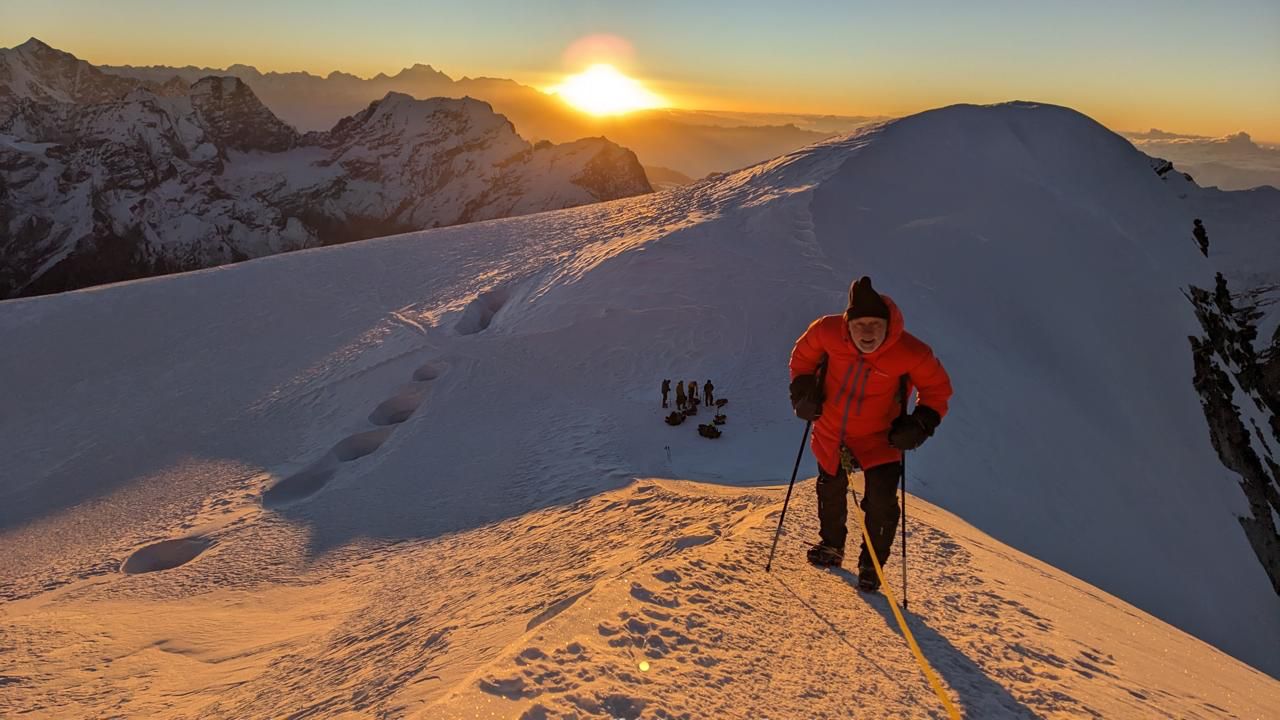
An autumn summit attempt normally begins very early, often before sunrise. Reaching higher elevations while darkness gradually changes into morning creates an unforgettable Himalayan experience.
As the sun rises, the first golden light illuminates the surrounding snow-covered peaks. With clear autumn skies, the contrast between the dark valleys and glowing Himalayan summits can be extraordinary.
This combination of summit achievement and Himalayan sunrise makes autumn particularly attractive to photographers and adventure travelers.
Standing at 6,476 meters provides a tremendous sense of accomplishment. For many climbers, Mera Peak becomes an important introduction to Himalayan mountaineering and a stepping stone toward more technically demanding objectives.
5. Remote Hinku Valley Adventure
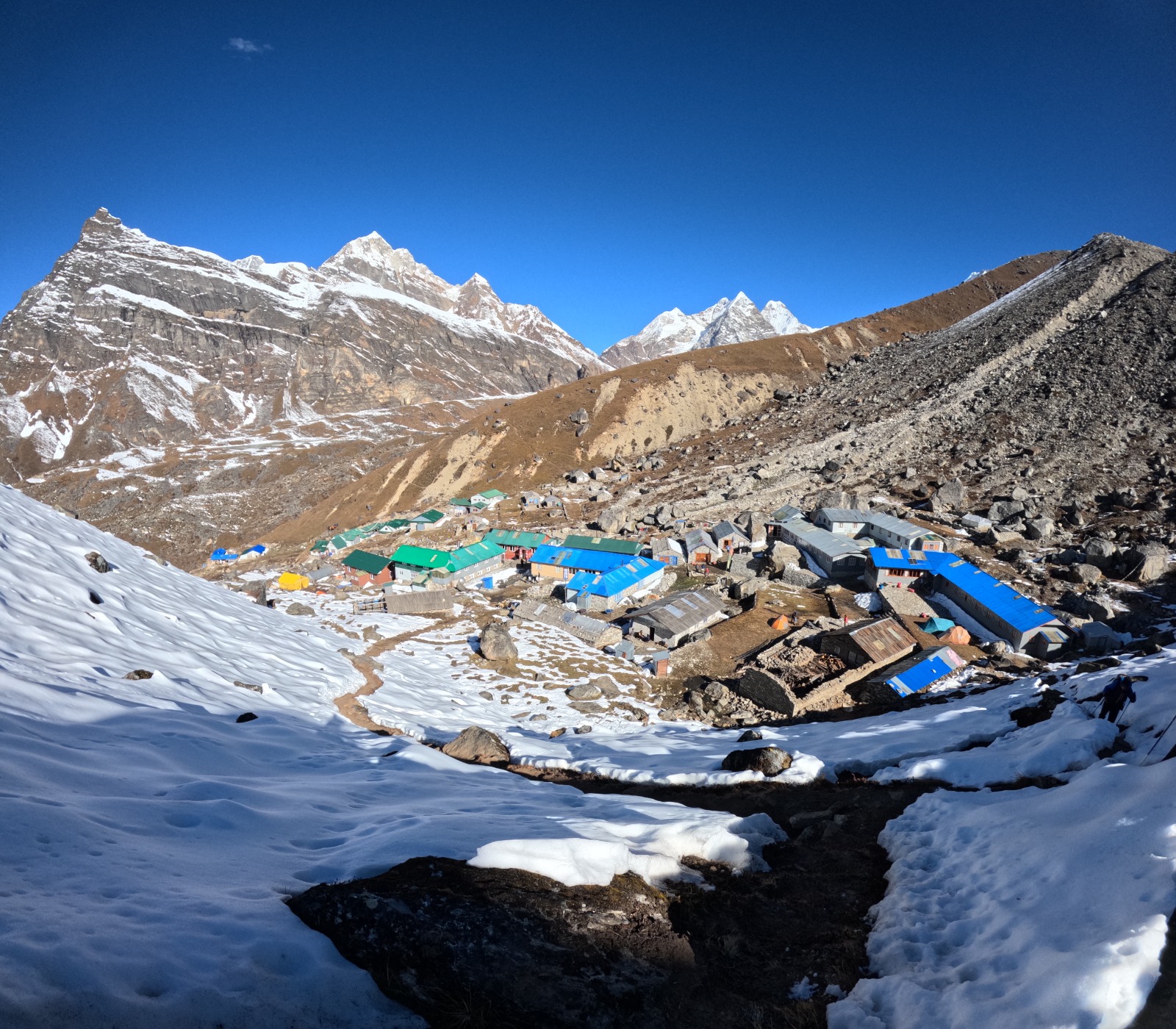
The journey to Mera Peak is itself a major attraction. The route travels through the Hinku Valley, where climbers encounter forests, rivers, waterfalls, alpine meadows, rugged mountain terrain, and remote settlements.
Compared with the heavily traveled Everest Base Camp corridor, the Mera region can provide a stronger sense of wilderness and solitude. The changing scenery keeps the approach interesting long before the actual summit attempt begins.
6. Dramatic Change in Himalayan Landscapes
One of the most fascinating aspects of the expedition is the transformation of the landscape with elevation.
The journey begins among lower Himalayan forests and valleys before gradually entering alpine terrain. As climbers gain altitude, trees become increasingly sparse and are replaced by rocky landscapes, high pastures, glaciers, snowfields, and enormous mountain walls.
Autumn's clear atmosphere makes this transition particularly impressive, allowing climbers to appreciate the changing geography throughout the expedition.
7. Sherpa Culture and Himalayan Hospitality
Mera Peak Climbing is not exclusively a mountaineering experience. The approach provides opportunities to encounter Sherpa communities, traditional villages, Buddhist cultural traditions, local architecture, and mountain hospitality.
Staying in local lodges and interacting with communities adds an important cultural dimension to the adventure. The experience becomes a combination of mountains, people, culture, and wilderness, rather than simply a summit expedition. (Nepal Guide Treks and Expeditions)
8. Exceptional Photography Opportunities
Autumn is particularly attractive for photographers because post-monsoon conditions can provide excellent mountain visibility.
Photographers can capture:
October's combination of clear skies and crisp mountain air can produce especially impressive long-distance Himalayan photographs.
9. Glacier and Snow-Climbing Experience
Mera Peak introduces climbers to a genuine high-altitude snow and glacier environment. The standard route involves glacier travel and requires appropriate mountaineering equipment and skills.
With qualified professional guidance, climbers can gain practical experience with equipment such as crampons, harnesses, ropes and ice axes. This makes the expedition valuable for people who want to develop foundational Himalayan climbing experience.
10. High-Camp Experience
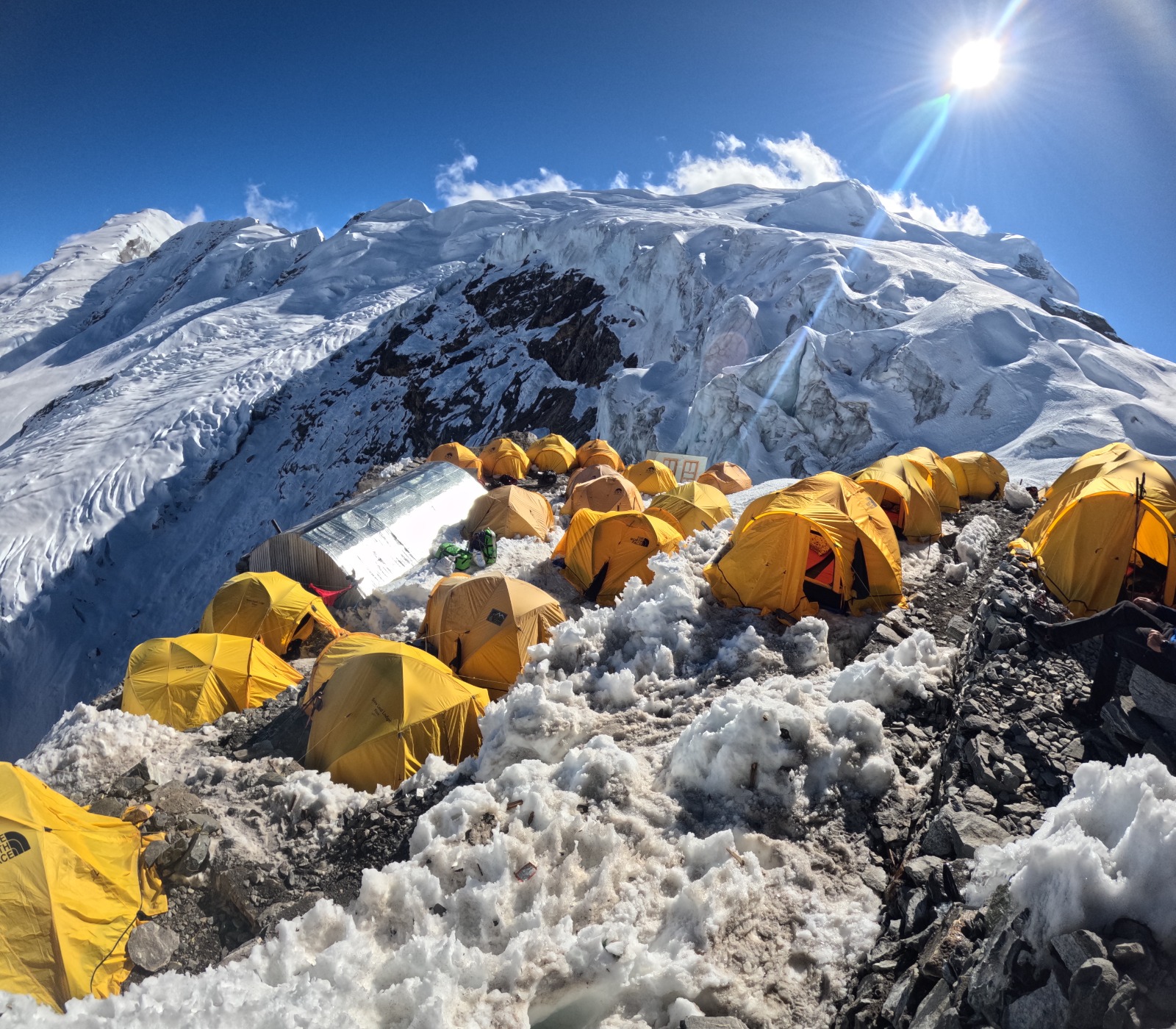
Spending a night at high altitude before the summit attempt is another memorable part of the expedition. The environment at high camp is dramatically different from the lower valleys: vegetation disappears, temperatures become extremely cold, and the surrounding landscape is dominated by rock, ice and snow.
The high-camp experience gives climbers a real understanding of the physical and mental demands of Himalayan mountaineering.
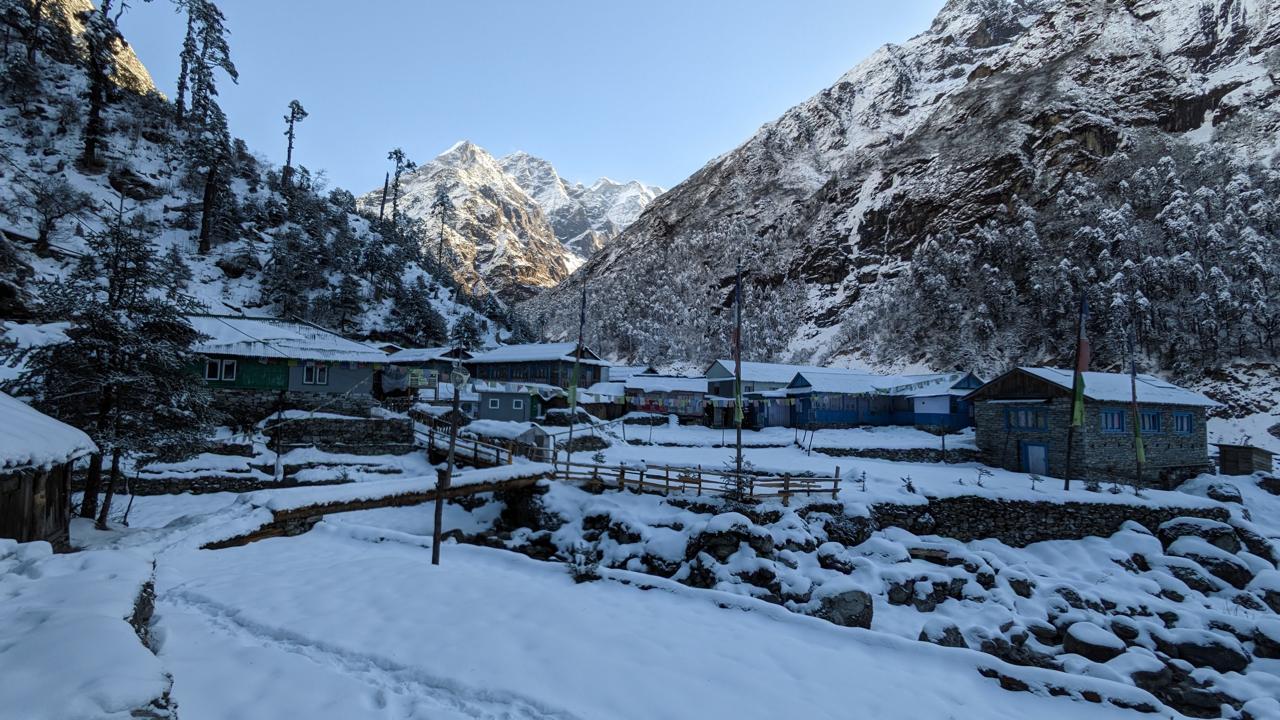
11. Beautiful Post-Monsoon Environment
The autumn season arrives after Nepal's monsoon, leaving many lower-altitude landscapes fresh and vibrant. Rivers and waterfalls can remain impressive, while forests and valleys retain their natural greenery.
As the route climbs higher, the scenery changes dramatically toward the cold alpine environment. This contrast between green lower valleys and snow-covered high mountains is one of the defining visual characteristics of the autumn expedition.
12. Exciting International Climbing Atmosphere
Autumn is a major trekking and mountaineering season in Nepal. Consequently, climbers can encounter adventure travelers and mountaineers from different countries along the route.
October can be the busiest period, but the Mera route still offers considerably more remote surroundings than some of Nepal's most heavily traveled trekking corridors.
13. Stronger Summit Opportunities
Weather is never guaranteed, but autumn generally provides a more favorable combination of clearer skies, reduced precipitation, good visibility, and established climbing infrastructure.
Recent operator analyses commonly identify autumn and spring as the primary climbing seasons, with October particularly favored. One 2026 analysis estimates overall Mera Peak summit success around 70–80% during the main autumn and spring seasons, although such figures should be treated as estimates rather than guarantees.
14. Magnificent High-Altitude Night Skies
When the weather is clear, the high Himalayan environment can provide spectacular nighttime views. Away from major cities and artificial light, the sky around the mountain can appear extraordinarily clear.
At high camp, climbers may experience a dramatic combination of dark mountain silhouettes, stars, snow and an enormous Himalayan sky—a completely different atmosphere from the lower valleys.
15. A Complete Himalayan Adventure
Perhaps the greatest attraction of autumn Mera Peak Climbing is that it combines many different experiences into one expedition:
That combination makes Mera Peak particularly appealing to adventure travelers who want something more challenging than a conventional Himalayan trek but who are not yet ready for a highly technical major expedition.
Mera Peak Climbing in autumn is far more than simply reaching a summit. It is an immersive journey through the remote Hinku Valley, traditional Himalayan communities, alpine wilderness, glaciers and some of the most spectacular mountain scenery in Nepal.
The combination of post-monsoon clarity, favorable autumn conditions, extraordinary mountain visibility, beautiful landscapes, Sherpa culture and the challenge of reaching 6,476 meters makes October and the broader September–November period especially attractive for a professionally organized expedition.
For Outward Adventure Treks, this can be positioned as a complete autumn Himalayan experience rather than simply a peak-climbing package: an adventure from the green valleys of Nepal to a high Himalayan summit surrounded by Everest, Lhotse, Makalu and the magnificent Mahalangur range.

Mera Peak Climbing in autumn is an exceptional choice for adventure seekers looking for a challenging yet highly rewarding 6,000-meter Himalayan climbing experience in Nepal. Rising to 6,476 meters (21,247 feet), Mera Peak combines high-altitude trekking, glacier adventure, Himalayan mountaineering, spectacular mountain views, and authentic Himalayan culture in one unforgettable expedition.
The autumn season, particularly October and early November, offers some of the most favorable conditions for Mera Peak Climbing. Following the monsoon, the skies are generally clearer, visibility improves, and the surrounding Himalayan peaks can appear exceptionally sharp. From the upper mountain, climbers may witness magnificent views of Mount Everest, Lhotse, Makalu, Cho Oyu, Nuptse, Baruntse, Chamlang, and other major Himalayan summits. These extraordinary panoramas, combined with dramatic sunrise and sunset views, make autumn one of the most visually rewarding periods to climb Mera Peak.
Beyond the summit, the expedition offers a complete Himalayan experience. The journey through the Hinku Valley introduces climbers to remote mountain landscapes, forests, alpine terrain, glaciers, traditional villages, and Sherpa culture. The gradual transformation from green valleys to rugged high-altitude terrain makes the route itself an important part of the adventure.
Although Mera Peak is often considered an accessible introduction to Himalayan peak climbing, it should not be underestimated. Altitude, cold temperatures, glacier terrain, changing mountain weather, physical exhaustion, and summit-day demands require serious preparation. Proper acclimatization, physical fitness, appropriate climbing equipment, experienced mountain guides, and flexible itinerary planning are essential for a safe and successful expedition.
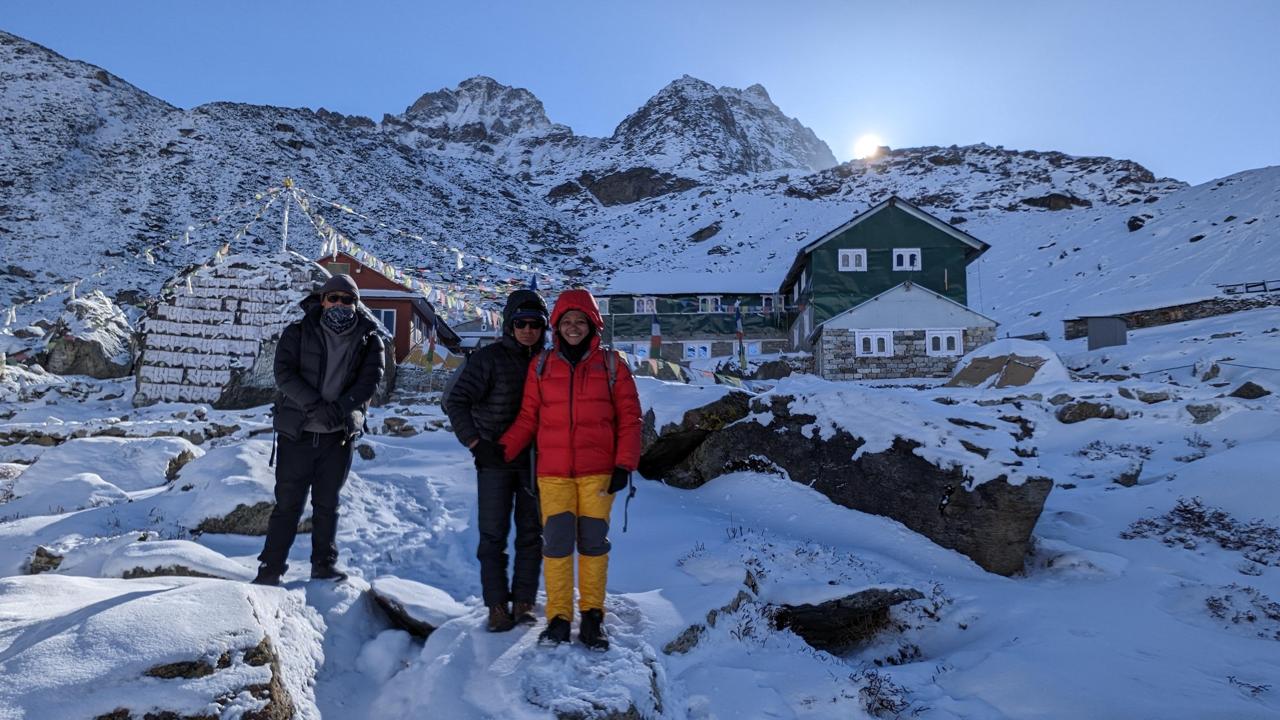
With Outward Adventure Treks, climbers can experience Mera Peak as a professionally organized Himalayan adventure, with careful attention to route planning, acclimatization, climbing logistics, mountain support, and responsible expedition practices.
Ultimately, Mera Peak Climbing in autumn is not simply about reaching 6,476 meters. It is about challenging yourself, crossing remote Himalayan landscapes, experiencing mountain culture, learning the fundamentals of high-altitude climbing, and standing beneath some of the world's greatest peaks. For properly prepared adventurers, the journey to the summit of Mera Peak can become a defining Himalayan achievement and an unforgettable chapter in their mountaineering journey.
 Oct 05, 2026
The Most Frequently Asked Questions About Island Peak: Detailed Climbing Guide Island Peak, officially known as Imja Ts...
Read More Sep 30, 2026
Lobuche Peak Climbing: Conquer the Everest Region Lobuche Peak Climbing is an exhilarating Himalayan adventure in Nepal...
Read More Sep 27, 2026
Chulu Far East Peak Climbing: 6,000m Himalayan Adventure in Nepal Chulu Far East Peak Climbing is a challenging Himalay...
Read More Sep 23, 2026
Mera Peak Climbing is one of Nepal’s most rewarding Himalayan adventures, offering an unforgettable journey to Mer...
Read More
Leave a Comment