
Any Questions? Email Us
Talk to an Expert
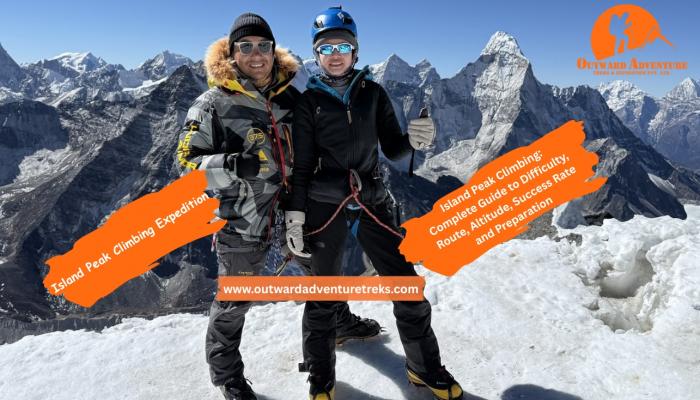
Island Peak Climbing is one of Nepal’s most rewarding Himalayan climbing adventures, offering an ideal introduction to high-altitude mountaineering without requiring the extreme technical experience demanded by Nepal’s major 7,000m and 8,000m peaks. Rising to 6,189 meters (20,305 feet) above sea level, Island Peak, locally known as Imja Tse, stands in the heart of the Everest region and provides spectacular views of some of the Himalayas’ most iconic mountains, including Mount Everest, Lhotse, Nuptse, Ama Dablam, Makalu, and Baruntse.
The journey to Island Peak is much more than a summit climb. It combines the legendary Everest Base Camp trekking route with practical mountaineering experience, making it an excellent choice for adventurous trekkers who want to progress from trekking into Himalayan peak climbing. The approach usually follows the classic trail through the Khumbu Valley, passing through vibrant Sherpa villages, ancient monasteries, suspension bridges, and dramatic mountain landscapes before reaching Island Peak Base Camp.
Altitude acclimatization is an essential part of a successful Island Peak expedition. The itinerary is designed to allow the body to gradually adjust to increasing elevation while providing sufficient rest and acclimatization opportunities. Reaching destinations such as Namche Bazaar, Tengboche, Dingboche, and Chhukung provides valuable time to adapt before the final ascent. The climbing team also receives guidance regarding hydration, pacing, nutrition, altitude awareness, and safe movement in challenging terrain.
The Island Peak summit day is the ultimate highlight of the adventure. Climbers normally begin their ascent very early, navigating steep terrain toward the higher sections of the mountain. After tackling the technical climbing sections, the final ridge rewards successful climbers with breathtaking panoramic views across the Everest region. Standing on the summit of Island Peak, surrounded by towering Himalayan giants, creates an unforgettable sense of achievement.
Island Peak Climbing is therefore an excellent adventure for trekkers seeking their first Himalayan climbing experience, mountaineering enthusiasts looking for a challenging 6,000m peak, and travelers who want to combine the cultural richness of the Everest region with a genuine climbing expedition. With proper preparation, adequate acclimatization, professional support, and a determined mindset, Island Peak Climbing with Outward Adventure Treks can become a defining Himalayan adventure and an important stepping stone toward higher-altitude mountaineering.
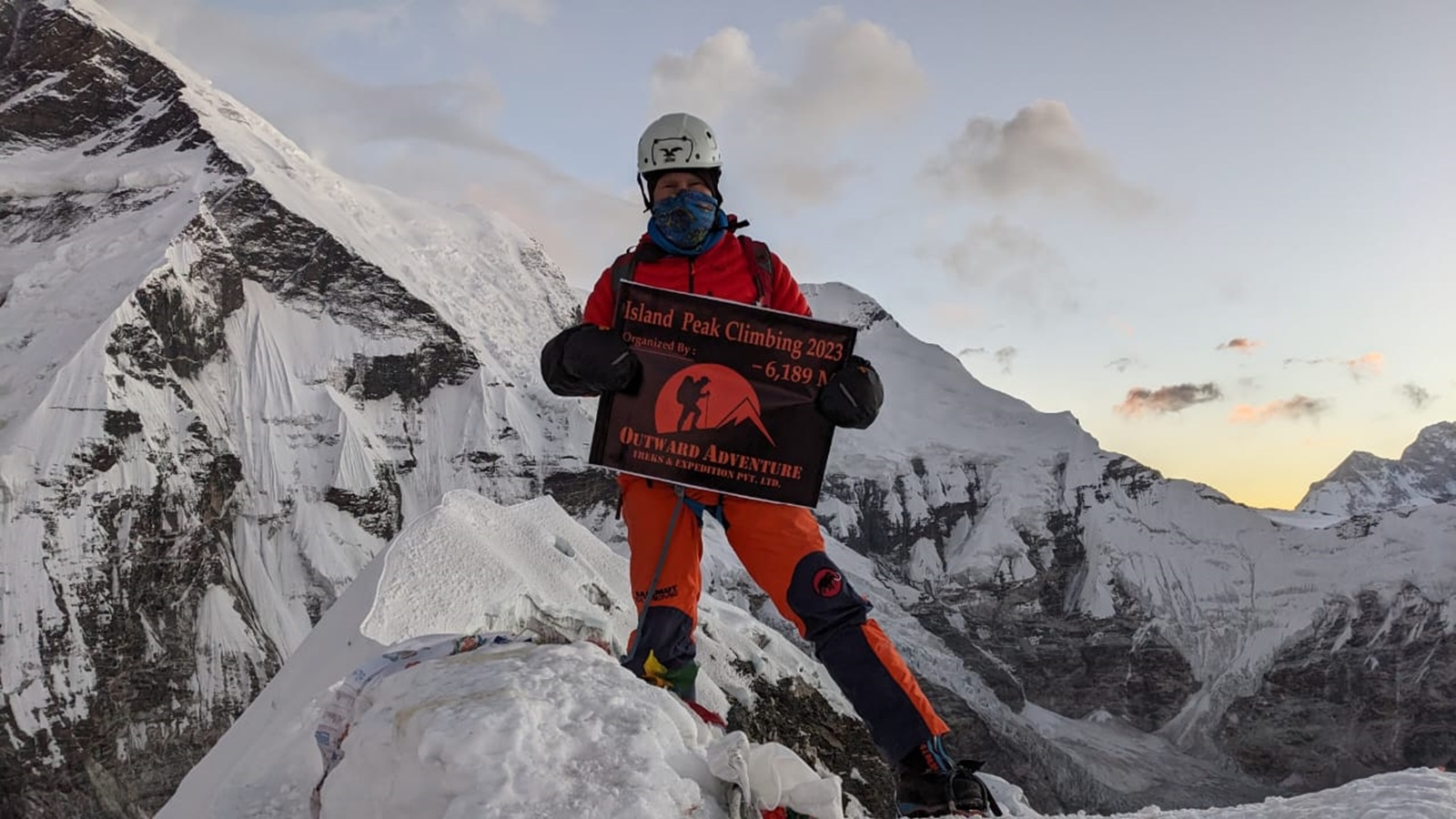
Island Peak is different from many other peak-climbing expeditions in Nepal because it offers a rare balance between accessibility, technical climbing, altitude, scenery, and Everest-region experience. It is challenging enough to provide genuine mountaineering experience, yet it does not demand the same level of technical expertise, expedition logistics, or extreme altitude exposure as many higher Himalayan peaks.
1. Ideal Introduction to Himalayan Mountaineering
Island Peak, also known as Imja Tse, reaches 6,189 meters (20,305 feet). This makes it significantly higher and more demanding than trekking peaks such as Poon Hill, but considerably more accessible than Nepal's major 7,000m and 8,000m mountains.
For trekkers who have completed high-altitude routes and want to transition into mountaineering, Island Peak provides an excellent opportunity to learn practical skills such as:
This combination makes Island Peak particularly valuable as a first serious Himalayan climbing objective.
2. Everest Region Experience Included
One of Island Peak's biggest advantages is its location in the Everest region. Unlike some peak-climbing expeditions where the primary attraction is simply reaching the summit, Island Peak allows climbers to experience the legendary Khumbu Valley.
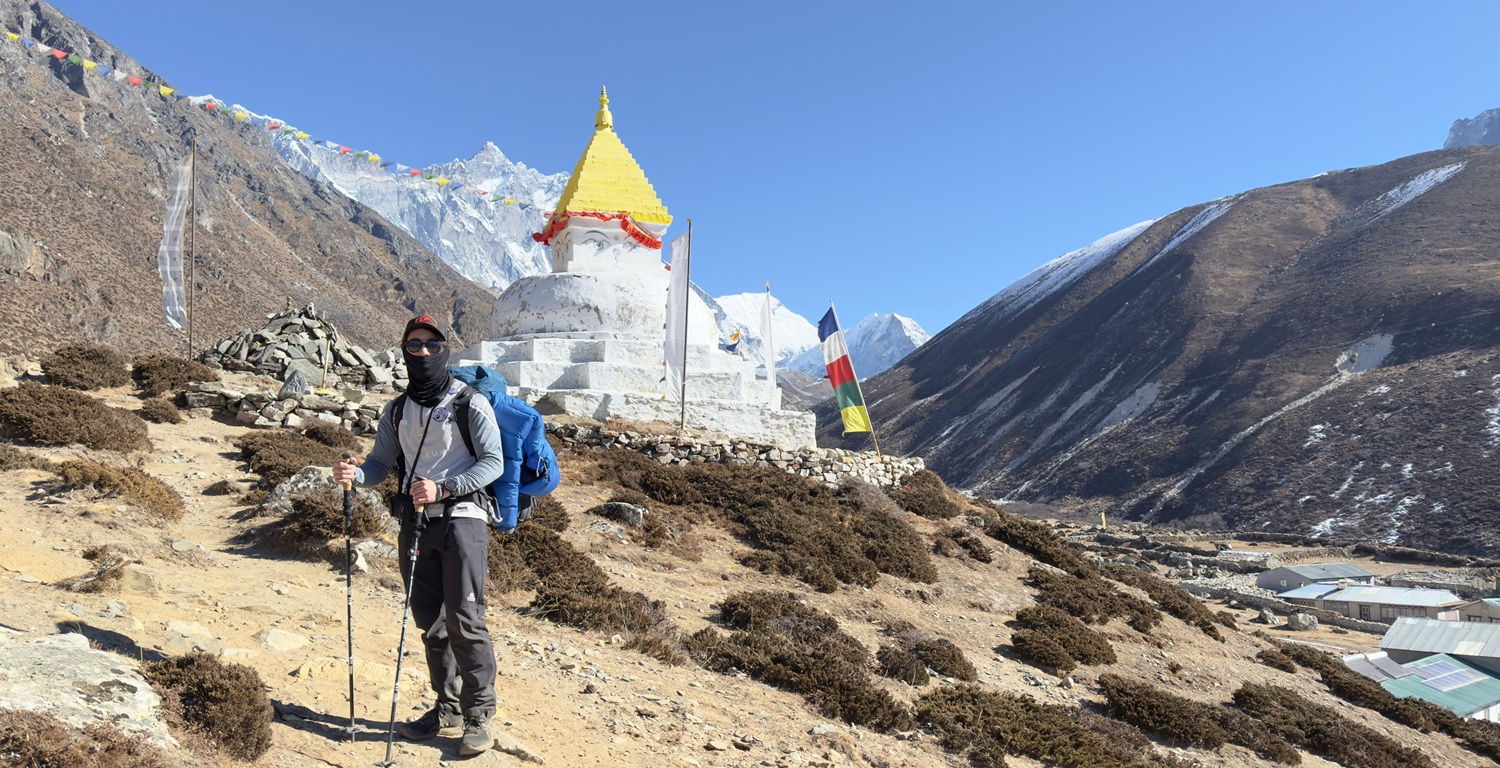
The journey passes through famous locations such as Namche Bazaar, Tengboche, Dingboche, and Chhukung, depending on the selected itinerary. Climbers experience Sherpa culture, Buddhist monasteries, dramatic valleys, suspension bridges, and some of the world's most spectacular mountain scenery.
The expedition can also be combined with Everest Base Camp, creating a much richer Himalayan adventure.
3. Exceptional Mountain Views
Island Peak offers an extraordinary Himalayan panorama for a 6,000m summit.
From the upper sections and summit area, climbers can experience views toward:
Mount Everest • Lhotse • Nuptse • Ama Dablam • Makalu • Baruntse • Cho Oyu-region peaks and surrounding Khumbu mountains
The proximity of Lhotse's massive south face is particularly impressive. The mountain scenery is one of the major reasons climbers choose Island Peak over less scenic introductory climbing objectives.
4. More Technical Than Trekking—But Not an Extreme Expedition
Island Peak occupies an interesting position between trekking and major mountaineering expeditions.
It is not simply a high-altitude trek. Climbers may need ropes, crampons, ice axe, harnesses, and other technical equipment depending on current route and mountain conditions.
At the same time, it does not generally involve the prolonged expedition infrastructure associated with peaks such as Manaslu, Dhaulagiri, or Everest.
This makes Island Peak attractive to people who want to experience real Himalayan climbing without immediately committing to a long, highly technical expedition.
5. Comparatively Manageable Expedition Duration
Many major Himalayan expeditions require several weeks or even months because of extensive acclimatization, multiple camps, difficult approaches, and long summit windows.
Island Peak can generally be incorporated into a relatively compact trekking-and-climbing itinerary. This makes it practical for adventure travelers who have limited vacation time but still want to attempt a genuine Himalayan summit.
The exact duration depends on the itinerary, acclimatization schedule, route conditions, and whether Everest Base Camp is included.
6. Excellent Stepping Stone for Future Peaks
Another important difference is its value as mountaineering preparation.
Successful Island Peak climbers gain experience with:
That experience can be useful when preparing for more demanding objectives such as Lobuche East, Mera Peak, Ama Dablam, Baruntse, Manaslu, or other Himalayan peaks, although each mountain requires its own appropriate experience and training.
7. The Challenge Is Real
Island Peak should not be described as an "easy" mountain simply because it is popular with first-time climbers.
The 6,189m altitude itself creates significant physical demands, and the summit push can involve long hours, cold temperatures, steep terrain, and technical climbing sections. Weather and snow conditions can also change the character of the route.
Therefore, physical preparation, acclimatization, appropriate equipment, and experienced mountain guides remain essential.
| Feature | Island Peak Climbing | Mera Peak Climbing | Lobuche Peak Climbing | Ama Dablam Expedition |
| Elevation | 6,189m | 6,476m | 6,119m | 6,812m |
| General level | Challenging | Challenging | Technical | Highly Technical |
| Everest-region experience | Excellent | Excellent | Excellent | Excellent |
| Suitable for developing climbers | Yes, with preparation | Yes, with preparation | Yes, with climbing skills | Requires stronger technical experience |
| Technical demand | Moderate | Moderate | Moderate–technical | High |
| Expedition complexity | Moderate | Moderate | Moderate | High |
With Outward Adventure Treks, Island Peak is approached as a complete Himalayan climbing experience rather than simply a summit attempt. Proper itinerary planning, acclimatization, experienced mountain leadership, equipment preparation, and safety management are central to the expedition.
For adventurers looking for their first 6,000m Himalayan summit, Island Peak offers one of Nepal's strongest combinations of technical climbing experience, Everest-region scenery, Sherpa culture, achievable expedition logistics, and serious high-altitude adventure. Island Peak stands out because it gives climbers the opportunity to move from trekking into genuine Himalayan mountaineering—without immediately taking on the extreme commitment of Nepal's highest and most technical expeditions.
For Outward Adventure Treks, the most important point is that summit success should not be treated as a guaranteed percentage. A carefully designed itinerary, adequate acclimatization, experienced climbing guides, proper preparation, and a suitable weather window can significantly improve an individual climber's chances.
Island Peak stands at 6,189 meters (20,305 feet) and is technically more demanding than a normal high-altitude trek. Nevertheless, it has a well-established climbing route and is supported by the extensive trekking infrastructure of the Everest region.
The biggest factors behind successful summit attempts include:
1. Proper Acclimatization
Altitude is one of the biggest reasons climbers turn around. A gradual itinerary through Namche Bazaar, Tengboche, Dingboche, and Chhukung allows the body to adapt progressively. Outward Adventure Treks' itinerary also incorporates acclimatization before reaching Island Peak Base Camp.
2. Physical Preparation
Island Peak involves long trekking days followed by a demanding summit push at more than 6,000m. Strong cardiovascular fitness, leg endurance, and the ability to walk for extended periods are essential.
3. Technical Climbing Skills
The upper mountain includes steep snow and ice terrain and fixed-rope climbing. Familiarity with crampons, ice axe, harness, ascender/Jumar, and rope techniques can make a significant difference. Outward Adventure Treks specifically highlights crampon and ice-axe skills as part of the mountain experience.
4. Weather Conditions
Even a physically strong climber may have to turn back if high winds, snowfall, poor visibility, or unstable mountain conditions make the summit unsafe. Therefore, having a weather-contingency day is highly valuable.
5. Experienced Mountain Guides
Professional guides help with route decisions, pacing, technical equipment, altitude monitoring, and summit-day safety. These factors can substantially improve the probability of a successful attempt.
| Climber Preperations | Average Chances of Island Peak Summit Success |
| Poor acclimatization / rushed itinerary | Lower / N/A |
| Average preparation | ~60–70% |
| Good fitness + proper acclimatization | ~70–85% |
| Well-prepared guided team + favorable weather | ~80–90% |
These are practical ranges synthesized from published industry estimates, not an official government statistic. Published sources themselves vary from roughly 65–70% to 85–90% depending on the methodology and conditions.
For climbers planning an Island Peak expedition with Outward Adventure Treks, focus on:
The best climbing seasons are generally spring (April–May) and autumn (October–November), when conditions are usually more favorable. Recent sources commonly report approximately 70–85% success in good conditions, with some autumn estimates reaching the 80–90% range.
The real key to success is preparation + acclimatization + technical skills + experienced guides + favorable weather + responsible decision-making.
For Outward Adventure Treks, the objective is not simply to maximize the summit percentage—it is to give every climber the best realistic opportunity to reach the 6,189m summit safely and responsibly.
The Island Peak summit day is the highlight of the entire expedition. It is not only about reaching 6,189 meters—it is about experiencing the dramatic landscapes, technical climbing, sunrise, and incredible sense of achievement along the way.
1. The Himalayan Sunrise
One of the most unforgettable moments is watching the first light of sunrise illuminate the Himalayan giants. Starting the summit push very early allows climbers to witness the mountains gradually turning golden as daylight reaches the high peaks.
2. The Lhotse South Face
As you climb higher, the enormous Lhotse South Face becomes increasingly impressive. Standing beneath one of the world's highest mountain walls is an experience that photographs cannot fully capture.
3. The Technical Climbing Section
Don't miss the experience of using your crampons, harness, ice axe, and ascender on the steeper sections. This is where Island Peak transforms from a trekking adventure into a genuine mountaineering experience.
4. The Final Summit Ridge
The final ridge is one of the most exciting parts of the climb. The exposure, narrow terrain, surrounding mountains, and altitude create an unforgettable feeling as you approach the summit.
5. The Island Peak Summit
Of course, the moment you stand on the 6,189m summit of Island Peak is something you should truly absorb. Don't rush immediately into photographs. Take a moment to appreciate how far you have come.
6. The Summit Panorama
From the summit, take time to enjoy the spectacular panorama of the Everest region, including views toward Everest, Lhotse, Nuptse, Ama Dablam, Makalu, Baruntse, and surrounding Himalayan peaks.
7. The Extreme High-Altitude Atmosphere
At more than 6,000 meters, everything feels different—the thin air, cold temperatures, silence, and vast Himalayan landscape. Experience the environment, but remember that altitude safety must always come before sightseeing or photography.
8. The Moment of Gratitude
Whether you are climbing for adventure, personal achievement, or simply to experience the Himalayas, take a quiet moment at the summit to appreciate your guides, Sherpa team, family, teammates, and everyone who helped you reach this point.
9. Your Team's Summit Moment
Island Peak is often a shared achievement. Celebrate with your climbing partners and guides, capture group photographs, and remember the people who shared the difficult ascent with you.
10. The Descent
Don't make the mistake of thinking the adventure is over after reaching the summit. The descent is equally important. Fatigue, changing weather, and technical terrain can make descending challenging. Stay focused, follow your guide's instructions, and descend carefully.
The Most Important Thing Not to Miss:
As this complete guide has explored, Island Peak is challenging but achievable for properly prepared climbers. Its altitude, steep sections, changing weather, snow and ice terrain, and summit-day endurance requirements demand serious preparation. However, with a carefully designed itinerary, proper acclimatization, physical conditioning, basic mountaineering training, quality equipment, and experienced mountain guides, climbers can significantly improve their chances of a safe and successful summit.
The journey itself is just as important as standing on the summit. Walking through the spectacular Khumbu Valley, experiencing traditional Sherpa villages and monasteries, crossing suspension bridges, witnessing sunrise over the Himalayan giants, and approaching Island Peak Base Camp create memories that remain long after the expedition ends. The final ascent adds another dimension, giving climbers valuable experience with crampons, ice axe, harnesses, fixed ropes, and high-altitude climbing techniques.
For 2027/2028, choosing the right season and allowing enough time for acclimatization will remain essential. Spring and autumn are generally preferred climbing periods, but mountain conditions can never be guaranteed. A successful expedition should therefore prioritize safety over summit statistics. Turning around when conditions become unsafe is not failure—it is responsible mountaineering.
Ultimately, Island Peak Climbing is not just about reaching 6,189 meters. It is about preparation, perseverance, teamwork, respect for the Himalayas, and the courage to challenge yourself in one of the world's greatest mountain environments.
 Oct 05, 2026
The Most Frequently Asked Questions About Island Peak: Detailed Climbing Guide Island Peak, officially known as Imja Ts...
Read More Sep 30, 2026
Lobuche Peak Climbing: Conquer the Everest Region Lobuche Peak Climbing is an exhilarating Himalayan adventure in Nepal...
Read More Sep 27, 2026
Chulu Far East Peak Climbing: 6,000m Himalayan Adventure in Nepal Chulu Far East Peak Climbing is a challenging Himalay...
Read More Sep 23, 2026
Mera Peak Climbing is one of Nepal’s most rewarding Himalayan adventures, offering an unforgettable journey to Mer...
Read More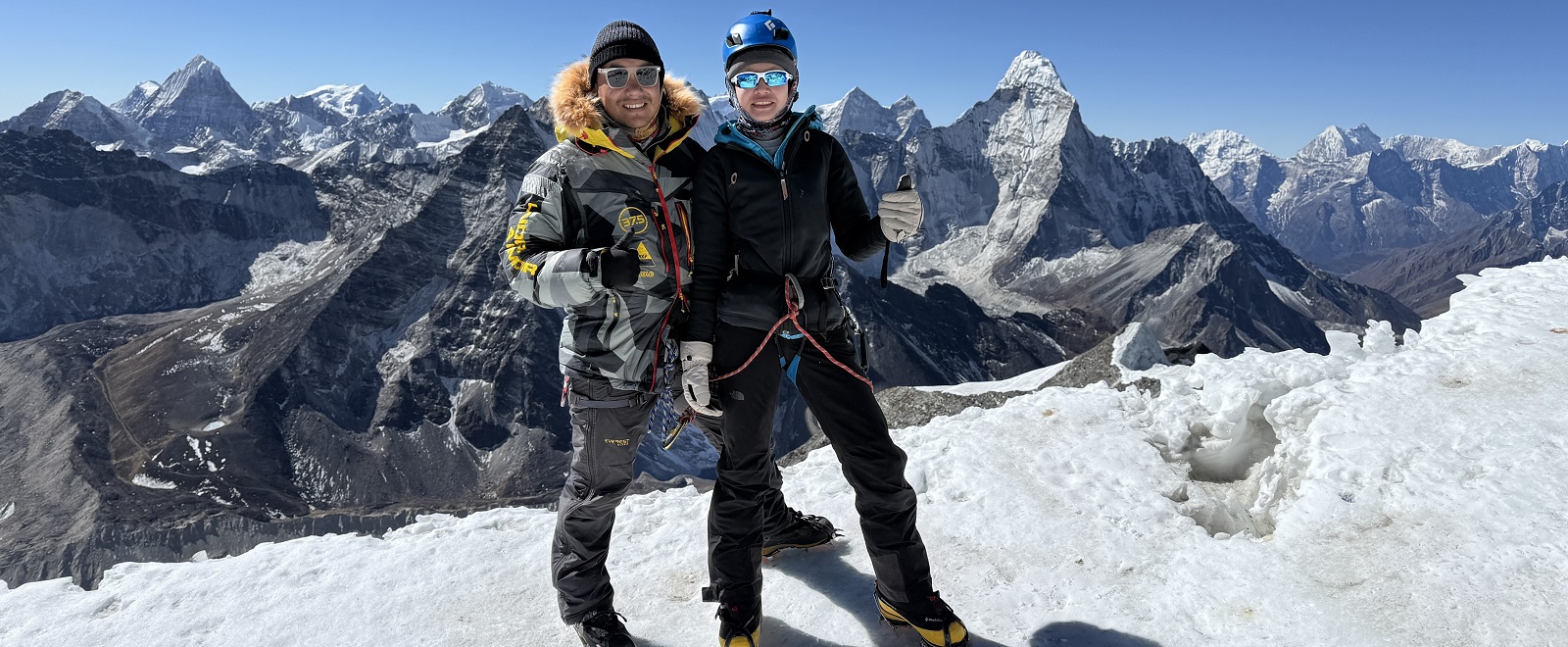
Leave a Comment